
05 Nov Skin & Coat Supplements for Pets: Omega-3, Biotin, Zinc and Allergy-Support Formulas
A soft, shiny coat is often one of the most visible signs that a dog is receiving appropriate nutrition and care. For pet parents, changes such as a dull coat, dry skin, itching, flaking, redness, or excessive shedding are easy to notice. These concerns have helped make the dog skin and coat supplement category an important part of the wider pet supplements market.
However, skin health is more complex than appearance alone. The skin is a large, active organ that helps protect a dog’s body from environmental factors, maintain hydration, regulate temperature, and interact with the immune system. A healthy coat also depends on continuous hair growth, adequate nutrients, appropriate grooming, and the absence of untreated skin conditions.
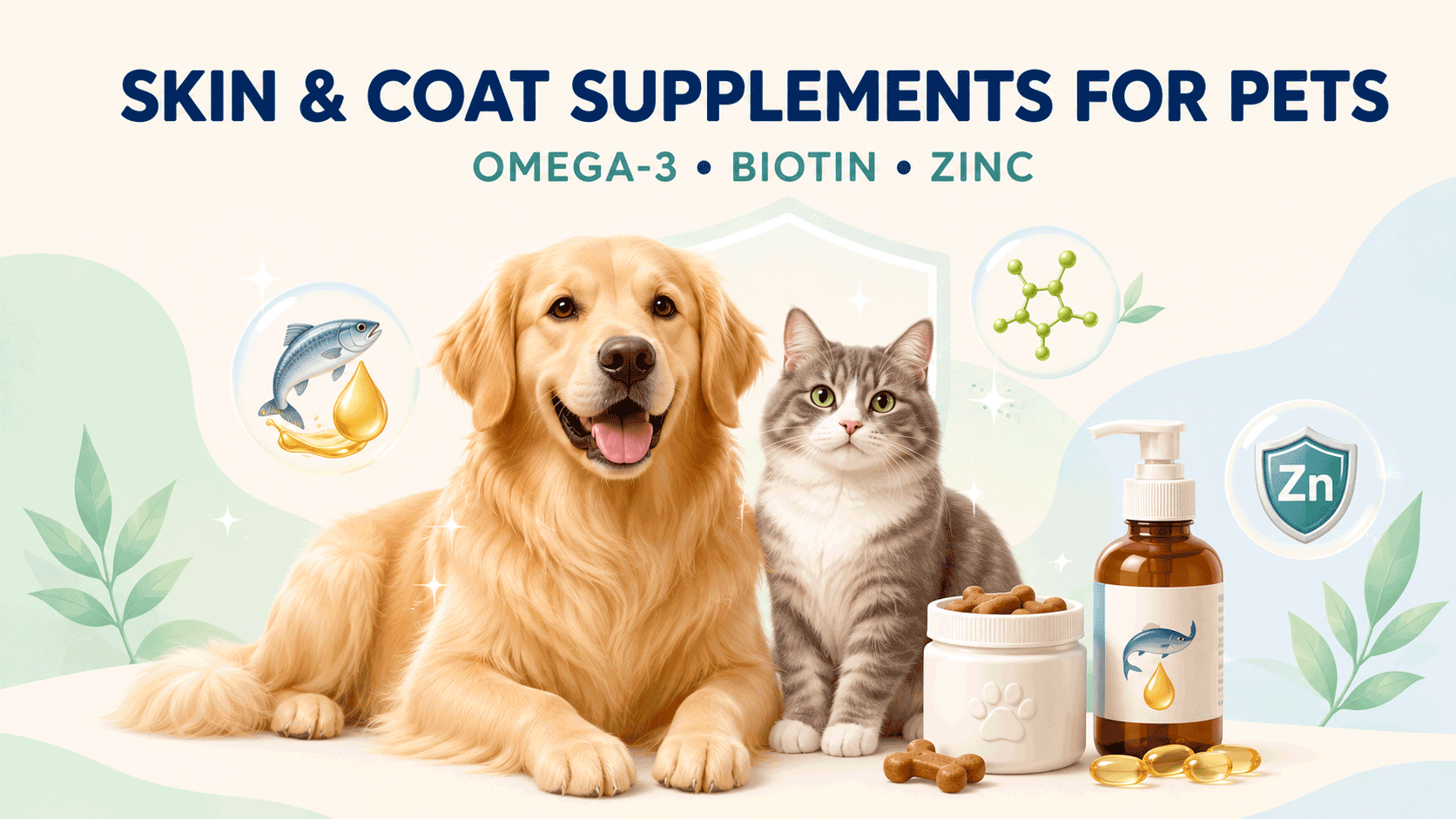
Skin and coat supplements for dogs commonly contain fatty acids, fish oil, biotin, zinc, vitamin E, and other vitamins and minerals. Some formulas are positioned for general skin support, while others are developed for dogs with sensitive skin, seasonal concerns, environmental allergies, or a dull coat.
These products can provide useful nutritional support, but they should not be presented as universal solutions for every skin problem. Fleas, infections, allergic reactions, endocrine disorders, environmental allergies, inappropriate bathing, and an unbalanced diet can produce similar symptoms. Good product development must therefore combine formulation knowledge with responsible positioning and clear guidance about when veterinary care is needed.
1. Understanding the Causes of Dog’s Skin and Coat Problems
1.1 How Nutrition Supports Healthy Skin and a Shiny Coat
A complete and balanced diet provides the foundation for a healthy dog. Protein, energy, essential fatty acids, vitamins, minerals, and other nutrients all play a crucial role in maintaining the skin and supporting normal hair growth.
The skin has a high rate of cell renewal, while hair is composed primarily of protein. If a dog does not receive enough high-quality dietary protein or energy, the body may direct available nutrients toward more immediately essential functions. Over time, the dog’s coat may become dry, brittle, sparse, or slow to regrow.
Fatty acids are also important structural components of cell membranes and the skin’s barrier function. This barrier helps prevent excessive water loss while limiting the entry of irritants and microorganisms. When the barrier is compromised, the skin may lose moisture more easily and become more sensitive to environmental factors.
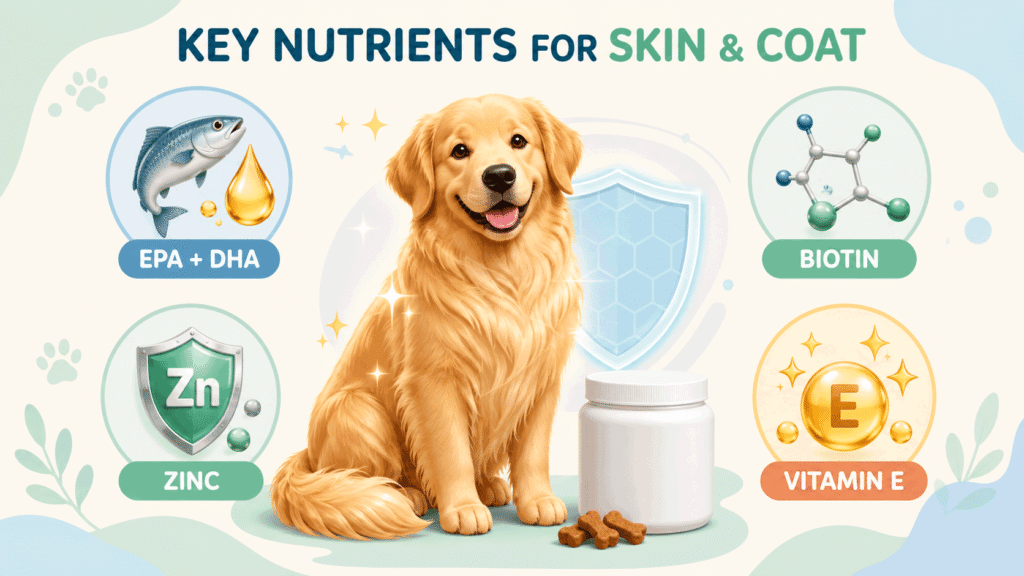
Omega 3 fatty acids and omega-6 fatty acids have different but complementary nutritional roles. Linoleic acid, an omega-6 fatty acid, is particularly important for maintaining normal skin barrier function. Omega-3 fatty acids such as eicosapentaenoic acid, commonly called EPA, and docosahexaenoic acid, or DHA, are widely studied for their role in supporting normal inflammatory responses.
This does not mean omega-6 fatty acids are inherently harmful or that a formula should contain only omega-3. Dogs require an appropriate supply and balance of different fatty acids. A product developer must consider the dog’s complete diet rather than evaluate one nutrient in isolation.
Vitamins and minerals are equally important. Zinc is involved in cell division, protein synthesis, immune function, wound healing, and maintenance of normal skin. Biotin participates in nutrient metabolism and is associated with normal skin and hair maintenance. Vitamin E acts as an antioxidant that helps protect cells from oxidative damage, while vitamin A contributes to normal epithelial tissue and skin-cell development.
These nutrients can support healthy skin when they are supplied at appropriate levels. Nevertheless, more is not always better. A complete dog food may already provide adequate quantities, and unnecessary supplementation can create nutritional imbalances. Excess amounts of some vitamins and minerals may cause toxicity or interfere with the absorption and use of other nutrients.
For that reason, supplements are most useful when they address a defined nutritional need, support a specific formulation strategy, or complement a diet under appropriate professional guidance. A shiny coat cannot be created by adding random ingredients to an otherwise unsuitable diet.
A healthy dog’s coat will usually look glossy for its breed and feel relatively soft, although coat characteristics vary widely. A short-haired dog, a double-coated breed, and a wire-haired dog should not be assessed according to the same visual standard. Age, genetics, season, reproductive status, grooming, climate, and overall health can all affect appearance.
Quality dog supplements should therefore support overall skin health rather than promise a cosmetic transformation that ignores breed and individual differences. The best formulas promote healthy skin as part of overall well being, not simply as a way to make the coat look shinier.
1.2 When Dull Coat, Itching and Excessive Shedding Need Veterinary Care
A dull coat or dry skin can sometimes be associated with nutritional gaps, but it can also result from frequent bathing, harsh grooming products, dry weather, low environmental humidity, parasites, infections, or underlying health conditions.
Excessive shedding is similarly nonspecific. All dogs shed to some degree, and seasonal coat changes can create dramatic but normal increases in loose hair. Breed, indoor temperature, daylight exposure, age, and reproductive hormones can influence shedding patterns.
When hair loss is patchy, accompanied by redness, odor, sores, pain, persistent itching, or a change in behavior, adding a coat supplement may delay the diagnosis of the real problem. Fleas, mites, bacterial infections, yeast, ringworm, food-related reactions, and environmental allergies can all cause itching or hair loss.
Dog’s allergies are particularly complicated because the visible symptoms may appear similar even when the triggers are different. A dog may react to flea bites, environmental allergens, or dietary components. Skin support supplements may provide additional support for the skin barrier or normal inflammatory response, but they do not identify or remove the underlying allergen.
This distinction is important for allergy-support formulas. A pet supplement can be positioned to support healthy skin in dogs experiencing seasonal or environmental challenges. It should not claim to diagnose, treat, cure, or prevent an allergic disease unless it has the appropriate regulatory status and evidence.
Pet owners should consult a veterinarian when symptoms are persistent, severe, recurrent, or accompanied by open wounds, ear problems, gastrointestinal signs, lethargy, weight change, or significant discomfort. Veterinary care may include a physical examination, parasite testing, skin cytology, culture, elimination diet, or other diagnostic work.
The dog’s current food should also be reviewed. Many commercial diets are formulated to be complete and balanced, making severe nutritional deficiencies less common. Problems can still occur when a homemade or highly restricted diet is poorly formulated, when food is stored incorrectly, when the dog eats insufficient quantities, or when disease affects nutrient digestion, absorption, or metabolism.
A dog skin and coat supplement should therefore be viewed as one component of a broader wellness plan. Appropriate food, parasite control, grooming, bathing frequency, environmental management, and veterinary care may be as important as the supplement itself.
Brands that explain these limitations protect their credibility. Responsible education demonstrates that the company understands the difference between nutritional support and veterinary treatment. It also helps pet parents select products for the right reasons.
2. Active Ingredients in a Dog Skin and Coat Supplement
2.1 Fish Oil Supplements and Omega-3 Fatty Acids for Skin Health
Fish oil is one of the most widely recognized active ingredients in dog skin and coat supplements. It is rich in the long-chain omega 3 fatty acids EPA and DHA, which can be incorporated into cell membranes and contribute to normal inflammatory regulation.
Research and veterinary references indicate that omega-3 fatty acids may provide useful additional support for dogs with certain inflammatory skin conditions. They are not replacements for diagnosis or necessary treatment, but they may complement a broader management plan. Omega-3 use has also been studied in relation to joint health, cardiovascular function, kidney health, immune function, and cognitive function.
Marine sources of omega-3 are generally more useful than plant sources when the goal is to provide EPA and DHA directly. Fish oil, including salmon oil and oils from other oily fish, naturally provides these fatty acids.
Plant oils usually provide alpha linolenic acid, or ALA. Dogs can use ALA as an essential fatty acid, but its conversion into EPA and DHA is limited. Therefore, a product that states only “1,000 mg fish oil” or “omega oil” does not give customers enough information to evaluate its functional composition.
Choosing the right omega-3 supplement requires looking at the actual amounts of EPA and DHA per serving. Two fish oil supplements may contain the same total amount of oil but deliver very different levels of these active ingredients. The serving should also be considered in relation to the dog’s weight, diet, health status, and intended use.
Fish oil may support healthy skin and a glossy coat by supplying fatty acids involved in cell-membrane structure and inflammatory regulation. In some dogs, appropriate supplementation may help improve coat shine or support dry, sensitive skin. However, it cannot be assumed that every dull coat is caused by insufficient omega-3.
Quality is especially important because fish oil is vulnerable to oxidation. Heat, oxygen, and light can cause the oil to deteriorate, producing an unpleasant odor and reducing product quality. Antioxidants such as vitamin E may be used as part of an appropriate formulation and stability strategy, but they do not remove the need for suitable sourcing, manufacturing, packaging, and storage.
The packaging system should limit exposure to oxygen and light. Liquid oil supplements may require controlled bottle materials, reliable closures, small openings or pumps, and clear storage instructions. Capsules can protect individual servings, while soft chews offer convenience but create more complex stability and processing questions.
Brands should also consider contaminant controls, species identification, sustainability, traceability, peroxide and anisidine values, heavy metals, and the declared EPA and DHA content. A Certificate of Analysis may provide useful batch information, but responsible quality assurance should also include supplier qualification and risk-based verification testing.
Topical omega-3 products are beginning to appear in the wider skin-support category. A topical formulation may help condition the coat or support the external skin barrier, depending on its composition. However, topical and ingestible products are not interchangeable, and claims about inflammation or allergy relief may change the regulatory classification of a product.
Before adding fish oil to a dog’s diet, pet parents should consult a veterinarian. Excessive fish oil intake may cause digestive upset, add unnecessary calories, affect normal clotting, or create an inappropriate nutrient balance. Product instructions should avoid encouraging consumers to combine multiple oil supplements without reviewing the total diet.
Available nutritional research indicates that fish oil provides EPA and DHA in forms that dogs can use more directly than plant-derived ALA. Appropriate omega-3 supplementation may also provide nutritional support for normal inflammatory responses and help maintain healthy skin in dogs with certain sensitivities.
2.2 Biotin, Zinc and Vitamins for Optimal Skin Health
Although fish oil receives much of the attention, effective coat supplements may include several complementary nutrients. Biotin, zinc, vitamin E, vitamin A, and selected B vitamins are commonly considered during skin and coat formula development.
Biotin is involved in the metabolism of fatty acids, amino acids, and glucose. It contributes to normal skin and hair maintenance, and biotin deficiency can be associated with skin and coat abnormalities. Egg yolks are a natural dietary source of biotin and other nutrients, although the suitability of any ingredient depends on the complete formulation.
Biotin is sometimes promoted as if it automatically accelerates hair growth in every dog. The evidence does not support such a broad promise. Supplementation is more likely to be relevant when there is a nutritional need or when biotin forms part of a thoughtfully designed combination of skin-support nutrients.
Some published research has reported favorable outcomes from biotin supplementation in dogs with certain fur and skin concerns. However, these findings should not be converted into a universal treatment claim. Product developers must consider the study population, formulation, dosage, research limitations, and relevance to the finished product before using such evidence in marketing.
Zinc plays a crucial role in normal skin turnover, protein synthesis, immune system function, wound healing, and the skin’s barrier function. Inadequate zinc status can contribute to scaling, crusting, hair changes, and poor skin health. Certain dogs may also have genetic or disease-related problems with zinc absorption or utilization.
That does not mean adding a high dose of zinc is a safe response to every skin problem. Zinc interacts with other minerals, and excessive intake can be harmful. The form of zinc, its bioavailability, the complete mineral profile, the target animal, and the total amount already provided by food must all be considered.
Vitamin E protects cellular components from oxidative damage and is particularly relevant in formulas containing polyunsaturated fatty acids, which are susceptible to oxidation. Its inclusion should be based on formulation requirements and the dog’s total nutrient intake rather than used only as a label decoration.
Vitamin A contributes to normal epithelial development and skin maintenance. Deficiency can be associated with poor skin and coat condition, but excessive vitamin A can be toxic. Claims that vitamin A simply “prevents dryness and flakiness” ignore the importance of dosage and the underlying cause of the symptoms.
Vitamin D also participates in many physiological functions, but adding vitamin D3 to a skin product solely because it “supports skin health” may create unnecessary risk. Vitamin D has a relatively narrow safety margin compared with many water-soluble nutrients. Its inclusion must be justified by the complete formulation and controlled carefully.
A stronger product-development approach begins by defining the purpose of the formula. A general wellness product may use moderate levels of fatty acids, biotin, zinc, and antioxidants to support healthy skin and a healthy coat. A product for sensitive skin may focus more heavily on EPA, DHA, barrier-support nutrients, and a simple ingredient profile without unnecessary colors or artificial preservatives.
Active ingredients should work together without creating an oversized serving, unpleasant taste, unstable product, or nutritional imbalance. A long ingredient list can look impressive online while performing poorly in real use. Effective formulation depends on appropriate quantities and compatibility, not the number of ingredients printed on the label.
3. Developing Coat Supplements for Dogs and Other Pets
3.1 Choosing Fish Oil, Soft Chews and Other Delivery Formats
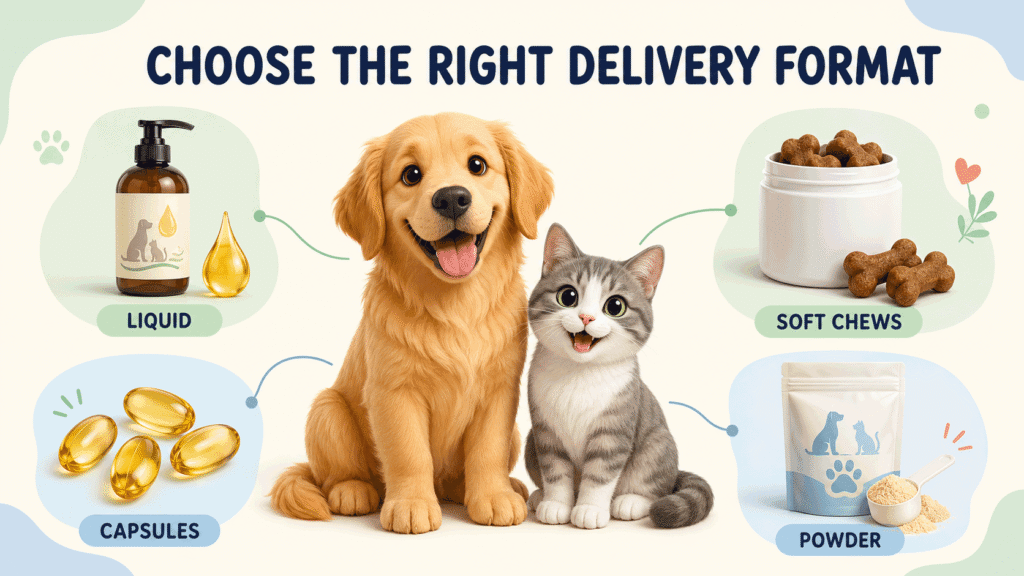
Fish oil supplements and coat supplements are available in liquids, capsules, powders, and soft chews. Each format creates different advantages and manufacturing challenges.
Liquid fish oil is easy to add to food and allows the serving to be adjusted according to the dog’s weight. It can also deliver a relatively high amount of EPA and DHA without requiring the dog to consume several chews. However, repeated opening exposes the oil to oxygen. Leakage, odor, dosing accuracy, bottle cleanliness, and consumer storage practices must be considered.
Capsules provide a sealed unit dose and may offer better protection from oxygen until use. They can be convenient for larger dogs but may be difficult for pet parents to administer to smaller dogs or animals that resist swallowing capsules. Capsule size and the concentration of EPA and DHA influence the number required per serving.
Soft chews are popular because they can be given like treats. A palatable chew may improve daily compliance, especially for long-term wellness routines. Yet soft chews contain more than the active oil. The formula also needs a stable matrix, flavor system, texture-control components, and protection against microbial growth and oxidation.
High fish oil levels can make soft chews greasy, soft, odorous, or difficult to manufacture. Heat used during production may also affect sensitive nutrients. The development team must balance the desired EPA and DHA dose with the physical limits of the delivery format.
A soft chew should not be described as better simply because dogs enjoy eating it. Pet parents need to know how much of each active ingredient the chew delivers. A tasty product with very low EPA and DHA may offer less meaningful nutritional support than a properly formulated liquid or capsule.
Powders provide another option and may combine fatty acids with vitamins, minerals, proteins, or other skin support ingredients. They can be mixed with food, but oxidation, flow, dose uniformity, moisture, and flavor distribution remain important considerations.
Products for cats require separate development. Cats have different nutritional needs, taste preferences, and metabolic characteristics. A dog supplement should not automatically be marketed for cats unless its ingredients, dosage, safety, and claims have been evaluated for both species.
Whatever the format, manufacturers should conduct suitable palatability, physical, chemical, microbiological, and stability testing. The final product must maintain its intended quality throughout its stated shelf life, not merely when the first production batch is completed.
3.2 Building Safe Allergy-Support Formulas for Pet Owners
The first step in developing a dog skin and coat supplement is to identify the customer’s specific need. A general shiny coat product, an omega-3 oil, a formula for sensitive skin, and an allergy-support soft chew should not all use the same formulation and marketing strategy.
For a general coat product, the priorities may be fatty-acid balance, biotin, zinc, vitamin E, taste, and convenient daily administration. A formula intended for dogs with sensitive skin may require fewer unnecessary components, carefully selected proteins and flavors, and clear control of potential allergens.
An allergy-support formula should be described cautiously. Omega-3 fatty acids may help support normal inflammatory responses and skin barrier function, but they do not eliminate fleas, cure infections, or remove environmental allergens. If a dog continues to scratch, lose hair, develop sores, or experience recurrent ear problems, veterinary care is necessary.
The label should clearly state the amount of important active ingredients. For fish oil products, listing EPA and DHA separately is more informative than providing only the total oil quantity. The source of the oil, recommended serving, storage conditions, species, life stage, and relevant warnings should also be clear.
Product developers should review the complete diet and expected usage pattern. Pet owners may combine dog supplements, fortified food, treats, and oil supplements without realizing that they contain overlapping vitamins and minerals. Formulas should be designed with a realistic understanding of this behavior, and labels should discourage unnecessary stacking where appropriate.
Brands should avoid unsupported promises such as “stops shedding,” “cures allergies,” or “eliminates itching.” These statements oversimplify conditions with many possible causes and may create regulatory problems. More responsible language includes “supports healthy skin,” “helps maintain a shiny coat,” “provides EPA and DHA,” or “supports normal skin barrier function.”
Consultation with a veterinarian is recommended before starting a new supplement, particularly for puppies, pregnant animals, dogs with chronic health conditions, pets taking medication, or animals with unexplained skin problems. The veterinarian can consider the dog’s weight, existing food, health history, and possible underlying causes before recommending a product or serving level.
For pet supplement brands, long-term success depends on more than selecting popular ingredients. A high-quality dog skin and coat supplement requires a rational formula, suitable delivery format, credible active-ingredient levels, palatability, oxidation control, appropriate testing, transparent labeling, and responsible claims.
Fish oil, omega 3 fatty acids, biotin, zinc, and vitamin E can all contribute to skin and coat nutrition when used appropriately. Their value comes from how they are sourced, formulated, tested, delivered, and explained—not simply from appearing on the ingredient list.
A strong product helps pet owners understand that healthy skin begins with a balanced diet and appropriate care. Supplements can provide additional support when a specific nutritional need exists, but they work best as part of a complete approach that includes suitable food, grooming, parasite control, environmental management, and veterinary guidance.
With this foundation, brands can develop skin and coat products that serve real customer needs, support the overall wellness of furry companions, and build trust in an increasingly competitive pet supplements market.