
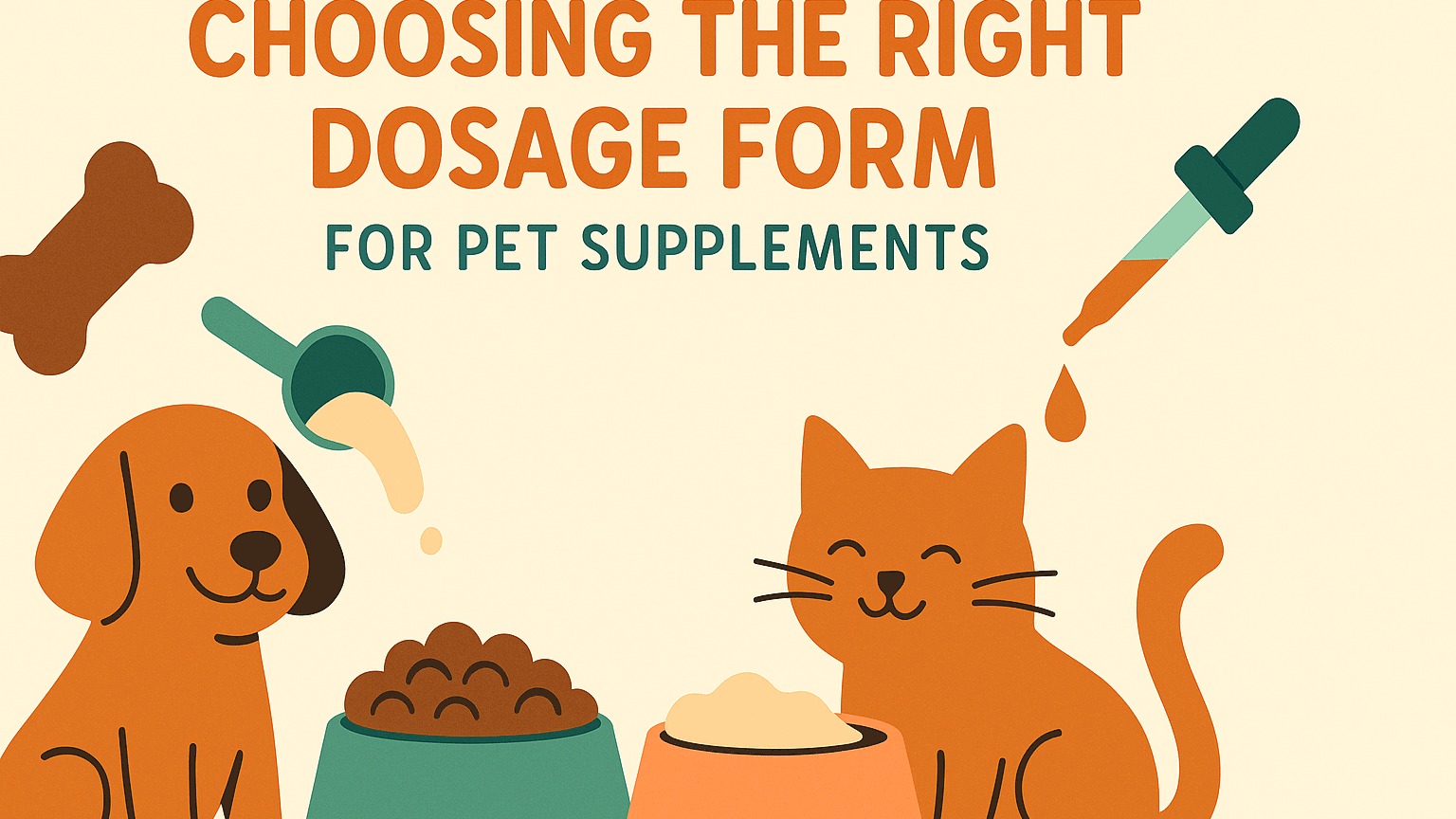
28 Feb Chews, Powders or Liquids Choosing the Right Dosage Form for Pet Supplements
As the pet supplement market expands at record speed, one trend has become impossible to ignore: dosage form matters as much as the formula itself. Pet parents increasingly expect supplements to suit their dog cat households, match their pet’s food preferences, and deliver nutrients in a way that their pets will actually eat. Whether the goal is joint mobility, immune health, healthy skin, digestive balance, or overall well-being, the right format—soft chews, powders, or liquids—can determine whether a supplement becomes a daily habit or an unused product on the shelf.
Today’s pet owners want supplements that taste good, fit easily into daily routines, and deliver visible improvements. For B2B buyers and private-label brands, understanding how each format works is essential for developing a product line that meets modern expectations.
1.1 The Rise of Format Diversity for Dog & Cat Wellness
As pets have become family members, pet parents now seek the same convenience, palatability, and clean-label standards in pet products that they look for in their own supplements. Dog cat owners prefer formats that fit naturally into pet’s food habits, whether their pup prefers treats or their cat prefers something mixed with wet food.
This shift has fueled the rise of soft chew pet supplements, which function like tasty treats. They are now widely used to support immune health, joint mobility, digestion, allergies, and healthy skin. Pets see them as rewards, not medicine—making them ideal for daily use.
1.2 Palatability, Compliance, and Daily Use
One of the biggest challenges in pet supplementation is simple: many pets refuse tablets or capsules. Even the clever attempt to hide tablets inside dog food does not always work, especially for cats with strong taste sensitivities. When a supplement tastes or feels “medicinal,” compliance drops dramatically.
Improving the pet’s food experience—better flavors, softer textures, or easy mix-in powders—significantly increases daily consumption. Powders and liquids are especially popular for picky eaters or pets needing beneficial bacteria (probiotics) to support digestion.
1.3 Matching Dosage Form to Health Needs
Different health goals often align better with specific formats:
Joint support for aging dogs often relies on chews or powders containing glucosamine and chondroitin.
Immune health formulas, especially those with probiotics, work well as powders or liquids that mix easily with food.
For first order purchases, pet parents tend to choose the easiest option—soft chews—because they deliver fast acceptance and fewer refusals.
The right dosage form reduces frustration, improves consistency, and supports long life and wellness for pets of all ages.

2. Soft Chew Pet Supplements: The Market Leader
2.1 Why Soft Chews Dominate the Market
Soft chews account for nearly 70% of pet supplement revenue globally, making them the most successful format. They are flavorful, easy to chew, and feel like a treat—ideal for dogs and acceptable even for some cats.
Pet parents love them because chews support a wide range of needs:
immune health
joint support and mobility
skin & coat health
allergies, digestive concerns, or calming needs
Because soft chews look like small snacks, many pets willingly eat them without hesitation.
2.2 How Soft Chews Improve Absorption and Compliance
Chewing activates saliva, which begins breaking down nutrients. This can help the body absorb vitamins, antioxidants, and minerals more efficiently. Pets do not see chews as medicine—dogs love meaty flavors, while cats prefer subtle fish, tuna, or broth notes.
Soft chews reduce the morning struggle many customers describe when trying tablets, making them ideal for long-term supplementation.
2.3 Soft Chews for Joint Mobility and Targeted Support
Soft chews are particularly effective for joint mobility, especially for senior dogs, large breeds, or pups showing early stiffness.
Common active ingredients include:
glucosamine – supports cartilage repair
chondroitin – protects healthy cartilage
MSM – helps reduce stiffness
omega-3 fatty acids – decrease inflammation
These ingredients work together to protect joints, support comfort, and maintain daily movement, helping pets play, walk, and enjoy life for longer.
3. Powders: Versatile, Mixable, and Ideal for Picky Eaters
3.1 Why Powders Are Gaining Popularity
Powders are rising in popularity because they mix directly into pet’s food, making them invisible to many cats and selective dogs. Pet parents can sprinkle them over dry dog food, wet food, or treats.
Advantages include:
Flexible dosing for any breed or age
Easy use in multi-pet households
No need to hide tablets or struggle with capsules
They’re especially helpful for pets that refuse chews due to taste, allergies, or sensitivities.
3.2 Powders for Immune Health and Digestive Balance
Probiotics and beneficial bacteria are often delivered in powder form because they stay stable and potent. These powders help:
support immune health
promote nutrient absorption
balance gut bacteria
improve stool quality
Digestive enzymes, vitamins, and antioxidants also blend well into powders that support daily wellness.
3.3 Powders for Joint Support and Mobility
Powders are ideal for large-breed dogs that need higher-strength joint support. They can incorporate high levels of:
glucosamine
green-lipped mussel
collagen
hyaluronic acid
These ingredients protect cartilage, reduce stiffness, and improve overall mobility without adding unnecessary calories.

4. Liquid Supplements: Precision, Fast Absorption, and Adaptability
4.1 Benefits of Liquid Pet Supplements
Liquid supplements offer precise dosing using a dropper or pump, making them ideal for puppies, senior pets, or dogs recovering from surgery. They also absorb quickly and are easy to mix into food.
Some formulas support:
healthy skin
joint mobility
immune health
energy and antioxidants
Liquids work especially well for cats, who often prefer gentle fish or broth flavors.
4.2 Ideal Applications for Liquids
Liquid Omega-3, probiotics, and enzymes are widely used to support:
coat shine and healthy skin
joint flexibility
digestive comfort
They’re also beneficial for dog cat households with pets that struggle to chew or swallow tablets.
4.3 When Liquids Outperform Chews or Powders
Liquid supplements are ideal when:
pets have dental issues
flavors must be subtle
dosage needs frequent adjustment
supplements must be absorbed quickly
pets refuse powders mixed with food
Liquids can be given directly by syringe or mixed into meals—making them convenient for daily use.
5. How Pet Owners Can Choose the Best Format
5.1 Consider the Pet’s Behavior and Eating Habits
Different pets prefer different formats:
Chews → perfect for treat-loving dogs
Powders → disappear into food for picky eaters
Liquids → best for pets needing fast absorption or flexible dosing
Evaluating a pet’s taste preferences, sensitivities, and meal routines helps pet parents determine the best product to buy.
5.2 Match Format to Functional Goals
Each health goal aligns best with certain formats:
|
Health Goal |
Ideal Format |
Key Ingredients |
|---|---|---|
|
Joint support |
Chews or powders |
glucosamine, chondroitin, MSM |
|
Immune health |
Powders or liquids |
beneficial bacteria, antioxidants |
|
Digestive balance |
Powders or liquids |
probiotics, enzymes |
|
Skin & coat |
Liquids or chews |
omega-3, vitamins |
For long-term joint protection, many veterinarians recommend combining a chew with a powder or liquid for maximum support.
5.3 B2B Considerations for OEM and Private Label Buyers
Providing multiple formats allows brands to:
increase repeat orders
attract new customers
serve both dog cat households
offer solutions for sensitivities and preferences
Soft chews often generate the highest reorder rates, while powders and liquids provide unmatched flexibility. Innovative formats such as squeeze gels or functional treats can further differentiate product lines.
6. FAQs — Choosing Chews, Powders, or Liquids
Q1: Are soft chews better than powders or liquids?
Soft chews offer high compliance and great flavor, making them ideal for daily joint mobility or immune health support.
Q2: When should powders be used?
Use powders for picky eaters, cats, or multi-pet households. They blend seamlessly into food.
Q3: Are liquids more effective?
Liquids often absorb quickly and allow precise dosing—ideal for puppies, older dogs, or pets with sensitivities.
Q4: Can a product line include all three formats?
Yes. Many successful brands offer soft chews, powders, and liquids to meet different customer needs.
Q5: What is the best format for joint support?
Soft chews (for compliance) and powders (for strength) work best when delivering glucosamine, MSM, and chondroitin.