
16 Jan Sustainable Pet Supplement Packaging A Growing Priority in the Pet Industry
Sustainability is no longer a marketing trend—it has become a strategic requirement for brands operating in the pet food and pet supplement category. As global pet ownership rises and more consumers adopt premium nutrition solutions for their furry companions, the environmental footprint created by packaging is attracting strong attention. The shift toward sustainable pet supplement packaging and sustainable pet food packaging is reshaping how brands source, design, and deliver products, while also strengthening brand image and influencing purchasing decisions.
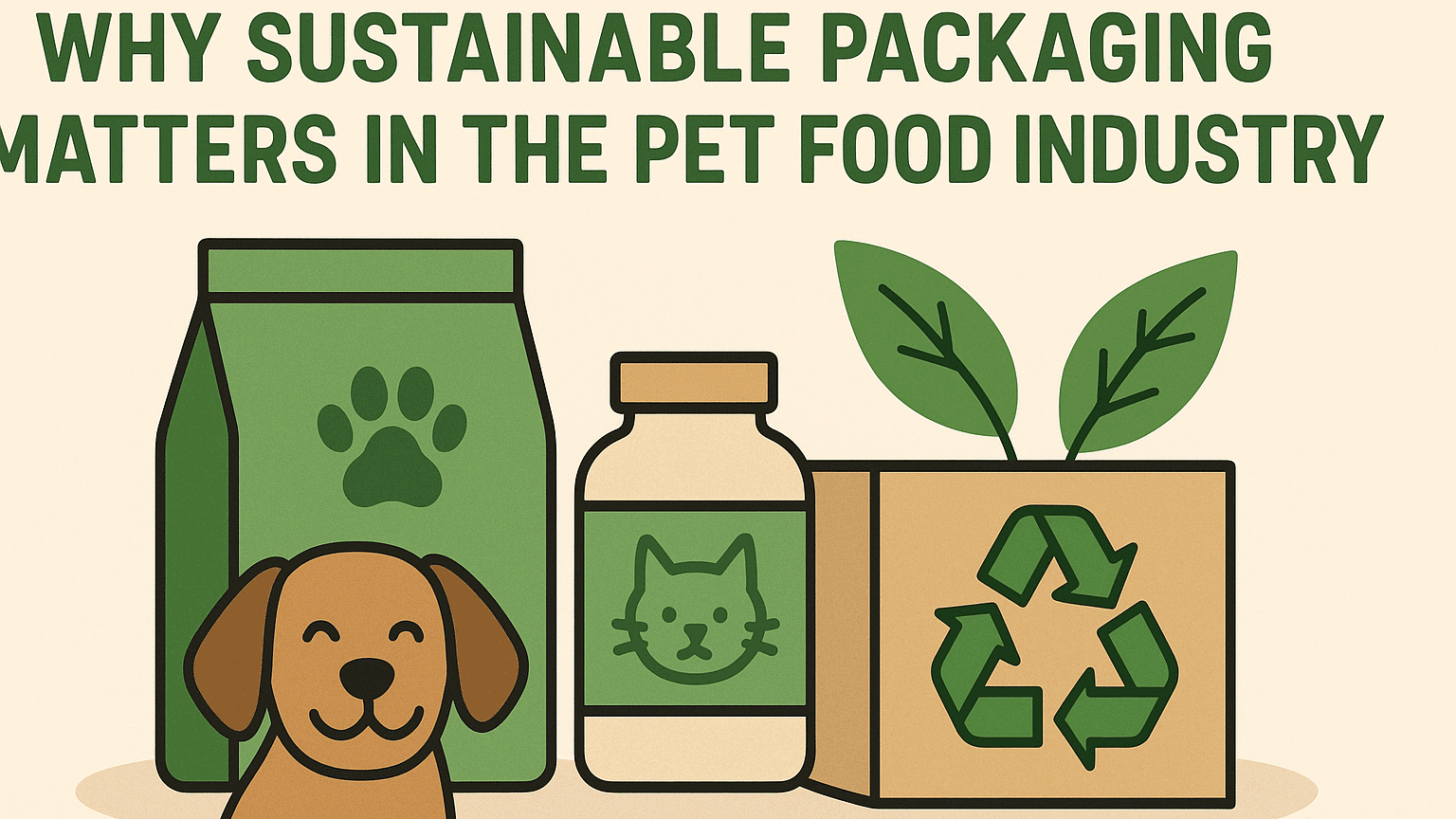
1. Why Sustainable Packaging Matters in the Pet Food Industry
1.1 Environmental Impact and Carbon Footprint
Traditional pet food packaging relies heavily on multi-layer plastic laminates, laminated pouches, aluminum coatings, or non-recyclable tubs. These structures are difficult to recycle, leading to significant packaging waste and long-term environmental impact. With millions of dry pet food, supplements, pet treats, and canned foods shipped globally every month, small changes in packaging design can greatly reduce cumulative greenhouse gas emissions, raw material use, and landfill accumulation.
Reducing the carbon footprint of packaging is now seen as part of holistic sustainability goals within the pet food industry. Sustainable materials, optimized formats, and improved recycling systems can lower energy consumption, reduce transportation emissions, and support a circular economy in which materials can be reused rather than discarded.
1.2 Consumer Demand and Market Expectations
Modern pet parents exhibit similar expectations for environmental responsibility across the brands they buy for themselves and their pets. Eco conscious pet owners are highly responsive to sustainability claims, recyclable materials, and transparent labeling. Surveys show that many consumers notice sustainability messaging directly on pet products and are willing to switch brands if they feel packaging better reflects their environmental values or reduces waste.
The trend toward sustainable pet purchasing aligns with broader lifestyle changes: conscious consumption, lower carbon emissions, responsible sourcing, and a desire for a healthier planet. These values extend beyond pet parents to non pet owners, who increasingly see sustainability as a benchmark for company ethics. As the pet population continues to expand globally, the pressure for environmentally friendly packaging solutions becomes even more significant.
1.3 Brand Image, Loyalty, and Corporate Responsibility
Adopting eco friendly materials strengthens brand identity and communicates long-term environmental responsibility. Sustainable packaging can differentiate brands in a crowded retail environment, where shelf appeal and first impressions strongly influence purchase behavior.
Many pet food brands now emphasize sustainability goals within their corporate mission, tying packaging innovation directly to their brand’s commitment to animal welfare, environmental stewardship, and a more sustainable future. Retailers increasingly prioritize shelf space for recyclable or compostable packaging, making sustainability a direct market advantage. Consumers also expect companies to show visible progress and transparent sustainability efforts, not just marketing language.
When pet owners feel that a brand shares their values and prioritizes sustainability, loyalty becomes stronger and long-term customer retention improves.
2. Materials and Packaging Formats Supporting Sustainability
2.1 Recycle-Ready Flexible Packaging
One of the fastest-growing trends in the pet industry is the shift toward flexible packaging made from mono-materials that are widely recyclable. Traditional laminated pouches may offer excellent shelf life and barrier protection, but mixed layers are difficult to recycle and lead to contamination within recycling streams. Mono-material structures—such as PE-only or PP-only films—allow pet owners to recycle packaging through curbside or store drop-off programs.
When combined with recycled content or post-consumer recycled (PCR) materials, flexible packaging supports a circular economy, turning reclaimed plastic back into usable packaging instead of single-use waste. Flexible formats also use less raw material than rigid packaging, reducing manufacturing inputs, transportation emissions, and greenhouse gas emissions.
2.2 Compostable Packaging and Fiber-Based Solutions
While recycling remains the most scalable global option, compostable packaging is gaining traction in select pet supplement categories—particularly in powders, dry treats, and dry pet food that do not require oil-resistant barrier layers.
Compostable materials include fiber-based laminates, paper, or plant-derived polymers that can break down naturally without toxic residues. Fiber-based systems made from cellulose, agricultural waste fibers, or other renewable resources can serve as lightweight pouches, refill sachets, or shipping materials. These options help minimize waste and provide meaningful end-of-life alternatives for packaging that is not expected to persist for decades.
For some premium pet food cans and chilled formats, compostable cartons or sleeves reduce additional plastic while still protecting food safe integrity.
2.3 Rigid Packaging and Refillable Systems
Rigid jars or tubs made from PCR plastic or sustainable materials remain important for certain pet supplement formats, such as joint-care chews, oils, or freeze-dried powders, where moisture sensitivity and maintain freshness are critical.
An emerging opportunity is refillable packaging. Brands are testing bulk-size refill bags for recurring supplement purchases, reducing the number of rigid containers used. For subscription programs, reusable jars paired with small refill packs offer a sustainable solution, especially in e-commerce supply chains where packaging volume matters.
The refill approach also extends packaging lifetime and directly reduces plastic waste per household, making it attractive to highly engaged eco conscious pet owners.
3. Intelligent and Innovative Packaging Technologies
3.1 Smart Packaging to Extend Shelf Life
The pet industry is rapidly exploring innovative packaging features that enhance protection, extend shelf life, and reduce waste. Moisture-control systems embedded within packaging films can replace individual desiccant packets and reduce contamination risks. Active barrier layers prevent oxidation, allowing oils, powders, and supplements to stay fresher without preservatives.
Intelligent indicators—such as thermochromic print, freshness markers, or smart tracking labels—allow pet owners to better assess usability, helping to reduce product disposal. These features align with environmental responsibility by minimizing waste from early discard, damaged products, or food spoilage.
3.2 Communicating Sustainability with Packaging Design
Packaging does not need to be complex to be effective. Clear sustainability messages can boost trust and make recycling easier. Phrases such as “Recycle Me,” “Made from Recycled Materials,” or “Compostable After Use” help educate consumers and reinforce a brand’s values. In mass retail environments, digital printing allows brands to customize sustainability claims, traceability content, and origin messaging without large minimum order requirements.
Tracking sustainability benefits on-pack, such as lowered carbon emissions or reduced plastic intensity, can also demonstrate measurable progress. Consumers appreciate simple, direct communication over ambiguous claims.
3.3 Packaging That Reflects Premium Quality and Pet Health
Eco-friendly formats do not need to sacrifice durability, safety, or product protection. Pet health and product quality must remain top priorities. That means ensuring barrier properties, safe materials, and controlled oxygen/moisture levels. Sustainable packaging must balance reduced material use with consistently safe performance, especially for sensitive items such as omega-rich oils, probiotics, freeze-dried powders, or active supplements.
The goal is not only sustainability—it is packaging that preserves quality, ensures safety, and maintains consumer confidence.
4. How Pet Brands Can Choose Sustainable Packaging Solutions
4.1 Matching Sustainable Packaging to Product Type and Channel
Selecting the right format requires understanding product needs and the channels through which it will be sold:
Flexible packaging is ideal for powders, treats, soft chews, and dry foods
Rigid packaging works well for oils, moisture-sensitive ingredients, or premium supplements
Compostable packaging may be ideal for samples, refills, or retail sachets
Bulk or refill systems reduce the need for multiple containers over time
Brands must also consider the performance required in shipping, e-commerce fulfillment, and retail stocking.
4.2 Evaluating Material Safety, Recycling, and End of Life
When choosing sustainable packaging, brands should evaluate:
How the material is sourced (responsible sourcing)
Whether the pack is recyclable, compostable, reusable, or refillable
The expected end of life scenario across different regions
Whether barrier performance protects freshness and nutrient quality
The regulatory status for food safe materials
Some formats may be widely recyclable in one country but not another. Understanding local recycling systems is vital for accuracy and honest sustainability claims.
4.3 Supply Chain, Logistics, and Manufacturing Compatibility
Introducing sustainable materials requires supply chain cooperation. Sustainable packaging must be compatible with existing manufacturing lines, form-fill-seal equipment, sealing technology, and labeling systems. Brands benefit when contract manufacturers and packaging partners support:
Lightweighting or optimize materials
Integration of PCR or recycled material
E-commerce–optimized design
Local sourcing to reduce transport emissions
Stronger packaging partnerships reduce operational risk, simplify compliance, and maintain product safety.
5. The Future of Sustainable Packaging in the Pet Industry
5.1 A Long-Term Market Shift, Not a Trend
The adoption of sustainable packaging solutions is accelerating with the combined pressure of consumer expectations, rising regulatory standards, and major retailer demands. Sustainability will become a baseline rather than a differentiator.
10 years from now, recyclable pet food packaging, compostable refill materials, reduced plastic intensity, and transparent sustainability labeling will likely be routine rather than optional.
5.2 Sustainability as Brand Strategy and Market Advantage
Brands that prioritize sustainability demonstrate stronger values, higher customer loyalty, and greater alignment with animal welfare and environmental ethics. Many consumer studies show pet owners maintain deeper affinity with environmentally friendly companies and reward brands that reduce waste, protect animals, and actively lower carbon emissions.
As sustainability becomes a major purchasing driver, adopting green packaging strengthens a brand’s competitive position and adds emotional value to pet families.
Sustainable Packaging Builds a Healthier Planet and Stronger Brands
The shift toward sustainable pet supplement packaging and sustainable pet food packaging represents a transformational opportunity for the pet industry. Reducing packaging waste, incorporating recycled content, extending shelf life, and using eco friendly materials deliver measurable environmental benefits while reinforcing a company’s brand image, safety standards, and commitment to responsible manufacturing.
As sustainability becomes central to consumer expectations and retailer regulations, early adoption protects brands from future risk and strengthens long-term loyalty. Choosing the right packaging solutions—whether recyclable, compostable, refillable, lightweight, or intelligently designed—allows pet owners to feel confident that their purchases support both pet health and a cleaner planet.
In the next decade, sustainable packaging will not just enhance business performance—it will define leadership within the pet food industry and help brands participate in a more sustainable future.